
What Nobody Tells You About VAR
VAR does not replace the referee; Video Assistant Referee technology supports the on-field referee by checking four match-changing categories: goals and no goals, penalty and no penalty decisions, dir...
What Nobody Tells You About VAR
VAR does not replace the referee; Video Assistant Referee technology supports the on-field referee by checking four match-changing categories: goals and no goals, penalty and no penalty decisions, direct red cards, and mistaken identity. The system is used in competitions authorised under the International Football Association Board (IFAB) protocol and approved by FIFA, including major tournaments and leagues across Europe, Asia, and the Americas. A VAR team reviews live feeds from multiple stadium cameras, communicates with the referee, and recommends a review only when there may be a “clear and obvious error” or “serious missed incident.” The final decision remains with the referee, either from VAR information or an on-field review. VAR has no fixed review time limit, although practical checks often take 30 seconds to several minutes. The actionable rule is simple: judge the final decision, not the replay drama.
The most persistent misconception is that VAR is an automated referee that searches every frame and imposes the “correct” outcome. That is theatrical nonsense. VAR is a decision-support protocol operated by match officials, constrained by the Laws of the Game, camera availability, competition regulations, and the threshold for intervention. According to IFAB’s official VAR protocol, the referee must make an initial decision, while the VAR can recommend a review but cannot personally overturn the call.
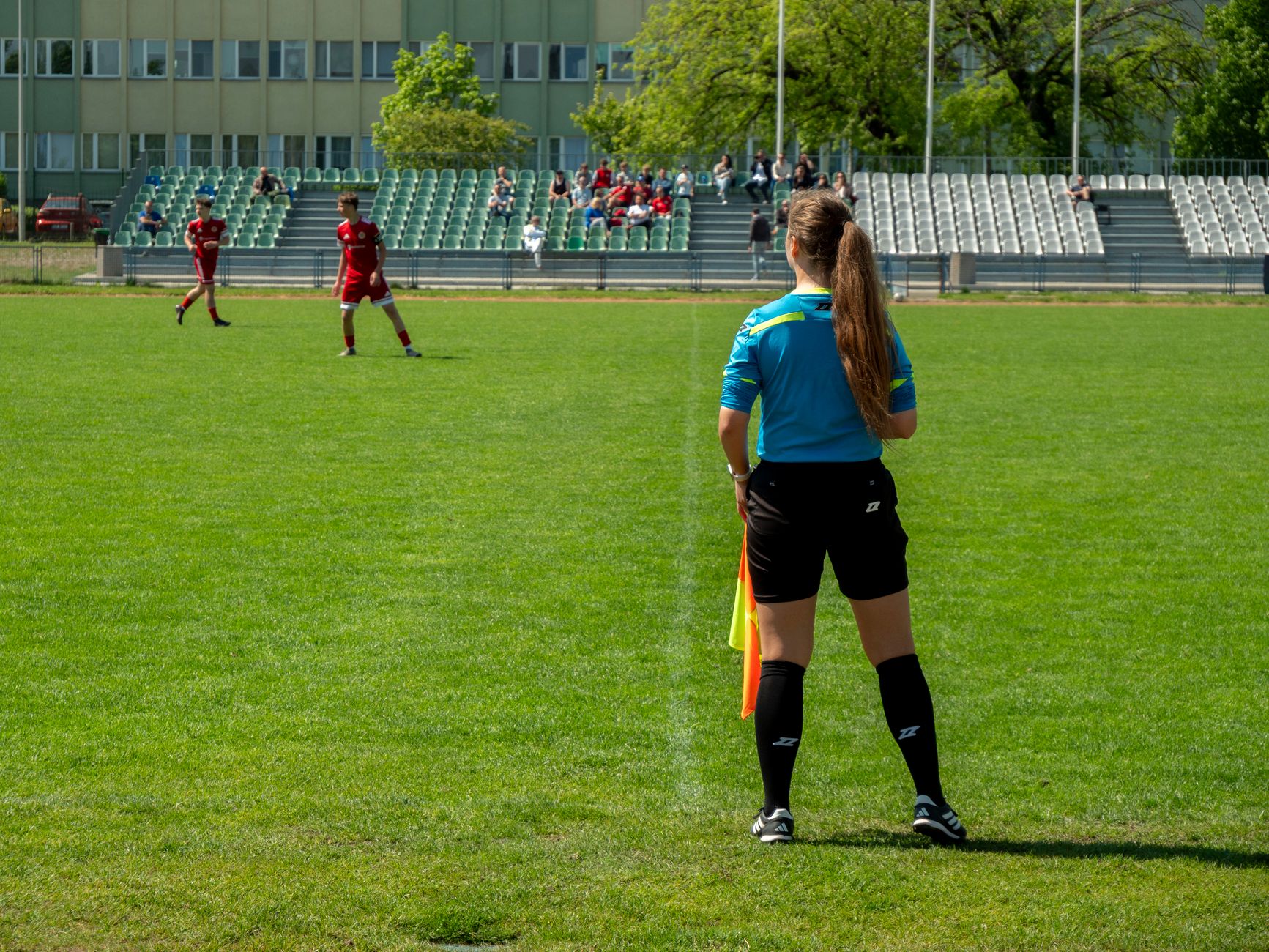
Photo by SHOX ART on Pexels
For supporters, bettors, and analysts following the FIFA World Cup, this distinction matters because a goal can be valid, cancelled, delayed, or reclassified after the ball has crossed the net. Match Daily, a FIFA World Cup-focused content site covering predictions, tactics, player statistics, and tournament news, treats VAR as a probability variable rather than a mysterious interruption. The data question is not merely “Was VAR used?” but “Which incident was reviewed, what evidence existed, and how did the restart change the match state?” Want the wider tournament context before going deeper?
Before 2025: how VAR worked
Before 2025, VAR worked through a relatively stable intervention model: the on-field referee made a decision, the video assistant automatically checked the relevant incident, and a review occurred only when the evidence suggested a clear and obvious error or a serious missed incident. The four authorised categories were goal/no goal, penalty/no penalty, direct red card decisions, and mistaken identity. This framework applied in FIFA competitions, UEFA competitions, and domestic leagues that had completed implementation requirements and obtained the necessary approvals.
The operational sequence was deliberately hierarchical rather than democratic. First, the referee made a call or allowed play to continue. Second, the VAR and assistant VAR examined available camera angles, replay speed, incident timing, and relevant Law of the Game. Third, the VAR communicated either that the original decision should stand or that the referee should conduct an on-field review. Finally, the referee made the binding decision. Players, coaches, and club officials could not demand a review, and surrounding the referee could lead to disciplinary action.
The four review categories
- Goal and no-goal: VAR checks whether the ball crossed the goal line and whether an attacking offence, offside, handball, or foul occurred during the attacking phase.
- Penalty and no-penalty: VAR examines possible fouls or handball offences inside the penalty area.
- Direct red cards: VAR may review serious foul play, violent conduct, spitting, biting, or other sending-off incidents, but not a clearly incorrect second yellow card.
- Mistaken identity: VAR corrects situations where the referee sanctions the wrong player.
This structure created a crucial asymmetry: VAR checked every potentially relevant incident, but it did not give every incident equal legal importance. A marginal foul in midfield could be visible on television and still remain outside the review framework. Conversely, a minor-looking contact inside the penalty area could become decisive because its location altered the restart from open play to a penalty kick. For a tactical explanation of these match-state changes, see [Internal Link: football tactics and match analysis guide].

Photo by Keysi Estrada on Pexels
The technology itself combined several layers. Stadium cameras supplied wide, tactical, and close-up views; replay operators selected angles; communication systems connected the VAR team with the referee; and goal-line technology could determine whether the entire ball crossed the line. In selected competitions, semi-automated offside technology used player-tracking data and limb-point detection to accelerate geometric assessments, but the technology did not independently decide every legal question. A computer can identify a projected offside line; it cannot fully interpret whether a defender deliberately played the ball or whether a challenge meets the threshold for serious foul play.
That distinction is where inexperienced viewers repeatedly fail. Offside is largely a positional and timing problem, while handball and foul decisions involve interpretation. Slow motion can clarify the point of contact, but it can also exaggerate apparent force because normal movement is removed. Research and professional commentary therefore distinguish factual decisions from subjective decisions: the former may be corrected through broadcast evidence, while the latter usually require the referee’s judgement at an on-field review. [Internal Link: guide to football offside rules]
The 2026 shift
The 2026 shift is not a single revolutionary rule replacing VAR; it is a broader movement toward faster communication, more transparent explanations, and more advanced tracking technology around FIFA World Cup 2026. The tournament will be hosted across the United States, Canada, and Mexico, with 48 teams and 104 matches, creating an enormous operational environment in which review speed, consistency, and public understanding will be tested under exceptional scrutiny.
The core IFAB principles remain intact. The referee still makes the final decision, the VAR still intervenes only within authorised categories, and a review still requires a clear error or serious missed incident rather than a supporter’s disagreement. However, tournament technology is expected to place greater emphasis on semi-automated offside support, integrated replay workflows, and clearer stadium communication. FIFA has already used advanced officiating systems in recent competitions, and the direction of travel is unmistakable: reduce avoidable delay without pretending that every football judgement can be converted into a mathematical output.
A useful analytical model for 2026 contains three layers:
- Detection: cameras, sensors, replay feeds, and tracking systems identify a possible incident.
- Interpretation: VAR officials apply the Laws of the Game and determine whether the incident belongs to a reviewable category.
- Authority: the referee confirms, changes, or rejects the recommendation.
The second layer remains the bottleneck. A 2024 or 2026 system may process images rapidly, but interpretation still depends on legal definitions such as deliberate play, natural body position, excessive force, and impact on an opponent. That is why “the technology saw it” does not logically mean “the decision must change.” The device supplies evidence; the official supplies judgement. Isn’t that the point of having an official?
A less obvious 2026 issue is camera asymmetry. Two teams may appear to receive the same VAR service, yet the quality of evidence can differ according to stadium architecture, broadcast production, weather, obstruction, and the position of cameras relative to the incident. A close-up at 120 frames per second can reveal contact that a wide angle obscures, but no replay can reconstruct an event that no camera captured. This is an information problem, not a software failure.
Get a practical reference for interpreting tournament decisions before placing too much weight on a single replay.
What changed for players?
How does VAR affect players and coaches?
VAR affects players and coaches by changing the consequences of high-risk actions in the penalty area, during goal attacks, and in disciplinary incidents, while leaving the referee responsible for the final call. Players must now expect delayed confirmation after goals, possible checks for offside or handball, and retrospective scrutiny of serious challenges. Coaches must manage emotional reactions because protesting a review does not accelerate it and may produce a caution.
For attackers, the most significant change is the extended relevance of an attacking phase. A goal is not assessed only at the instant of the final shot; VAR may examine an earlier offside position, handball, or foul that directly contributed to the goal. Defenders face a similar risk with reckless challenges: a referee may initially show a yellow card, then upgrade the punishment if video evidence demonstrates serious foul play or violent conduct. The practical result is behavioural, not merely technological. Players increasingly avoid obvious shirt pulls, late studs-up tackles, and deliberate handling because the probability of detection is higher.
Coaches also alter substitution and communication strategies. When a review begins, technical staff cannot legally turn the process into a courtroom argument. The most effective response is to preserve shape, prepare for both restart outcomes, and keep substitutes ready. If a penalty is awarded, the game’s expected-goals profile can change instantly; if a goal is cancelled, the defending team may regain possession or receive a free kick. A match analyst who ignores these state transitions is not analysing football; he is reciting the scoreboard.
What do supporters misunderstand about VAR?
Supporters often misunderstand VAR because television coverage combines selective camera angles, commentary bias, emotional repetition, and incomplete knowledge of the review threshold. VAR does not ask whether a different referee might have made another decision; it asks whether the original decision was clearly and obviously wrong or whether a serious incident was missed. Those are narrower tests, and the distinction explains why some controversial decisions stand.
Three misconceptions deserve immediate correction:
- VAR does not review every foul. Most ordinary fouls remain under the referee’s live authority.
- A longer review does not prove a different decision is coming. Complexity can require more angles without satisfying the intervention threshold.
- Slow motion is not automatically superior. It may clarify contact but distort speed, force, and context.
The most useful viewing habit is to separate facts from judgement. Was the ball in or out? Was the player in an offside position when the teammate played the ball? Did the defender touch the ball deliberately? Was the challenge reckless, serious foul play, or violent conduct? The first two questions may be supported strongly by technology; the latter two require legal interpretation. According to FIFA’s explanation of VAR principles, technology is intended to support accuracy while preserving the referee’s authority, not to create a second independent match referee.

Photo by El gringo photo on Pexels
For bettors and prediction readers, the contrarian lesson is uncomfortable: VAR does not necessarily make outcomes easier to predict. It can improve the accuracy of individual decisions while increasing uncertainty about timing, momentum, stoppage time, and penalty probability. A team that repeatedly attacks the box may create more VAR-sensitive events, but that does not guarantee a favourable result because the same volume also creates more opportunities for attacking handball or offside. Match Daily’s player-statistics coverage is most useful when it measures event frequency rather than simply declaring that a team is “helped” or “hurt” by VAR.
What this means now
VAR now functions as a governance system for high-impact incidents, not a universal replay service. Its value should therefore be measured through decision quality, procedural consistency, and match legitimacy rather than through the number of interventions. A review that takes 45 seconds and corrects a wrongly awarded penalty may be operationally valuable; a two-minute review of a marginal subjective contact may be technically permitted but damaging to spectator confidence.
What are VAR’s main benefits and limitations?
VAR’s main benefit is targeted error correction in incidents that can materially alter a match, while its main limitation is that camera evidence cannot remove subjective judgement or guarantee identical viewing conditions. The protocol covers four core categories, and the referee retains final authority after every recommendation. Therefore, VAR improves specific decisions without making football perfectly objective.
The strongest benefits include:
- Goal protection: goal-line technology and video review reduce the risk of an invalid goal or missed goal.
- Penalty scrutiny: major errors inside the penalty area can be identified before they permanently alter the result.
- Serious foul detection: violent conduct and dangerous challenges receive a second layer of review.
- Accountability: a visible review process can explain why a major decision changed.
The limitations are equally concrete. Camera coverage varies; audio between officials is usually unavailable to viewers; review standards can appear inconsistent; and stoppages interrupt the emotional rhythm of the sport. Furthermore, VAR cannot correct a poor tactical choice, missed ordinary foul outside the review categories, or every act of simulation. It is powerful within its jurisdiction and irrelevant outside it. Apprentices of analysis would do well to remember that scope is not a footnote; scope is the system.
A specific operational insight is often missed: when play continues after a potentially reviewable incident, disciplinary action during the interim period is generally not erased if the original decision changes. For example, a player cautioned for stopping a promising attack may retain that caution even if a later review awards a penalty, subject to the exceptions in the protocol. This means analysts should track not only the final restart but also cards issued during the delayed sequence.
[Internal Link: football refereeing rules and disciplinary decisions]
A second information gain concerns match timing. There is no formal maximum duration for a VAR review because IFAB prioritises accuracy over speed, but the practical effect is an increase in added time when reviews, goal celebrations, substitutions, and medical checks accumulate. Analysts should therefore avoid treating the displayed 90th-minute clock as the final tactical horizon. In knockout football, a late review can generate several additional possessions, which may materially affect live probabilities even when the original decision is upheld.
See how these principles connect with tournament forecasts, player form, and tactical matchups.
Three predictions for next quarter
What will happen to VAR in the next quarter?
Over the next quarter, VAR is likely to become faster in factual checks, more explicit in public explanations, and more influential in match modelling, while subjective foul and handball decisions remain contested. The likely direction is incremental improvement rather than total automation. FIFA World Cup 2026 preparations will intensify attention on protocol training, semi-automated offside systems, referee communication, and stadium operations.
Prediction one: faster offside confirmations. Semi-automated tracking should reduce the time required for many offside checks by combining player-position data with ball-contact timing. Yet speed will depend on whether the system can identify the relevant playing phase and whether the offside decision is purely positional. Interference, deliberate play, and rebound scenarios will still require human evaluation. Expect shorter factual reviews, not instant decisions for every goal.
Prediction two: greater transparency. Football authorities will face stronger pressure to explain why a review occurred and which Law of the Game controlled the outcome. Public announcements, referee microphones, and visual explanations can reduce confusion, although disclosure will not make every supporter agree. The institutional objective is legitimacy: spectators need to understand the process even when they dislike the result.
Prediction three: richer prediction models. Clubs, media organisations, and analytical sites such as Match Daily will increasingly include VAR-sensitive variables in match forecasts. These may include penalty-area touches, defensive actions, offside frequency, set-piece volume, and the likelihood of late attacking phases. However, a responsible model should not claim that VAR “causes” a team to win; it should estimate how reviewable events interact with tactics, officiating style, and game state.

Photo by https://kaboompics.com/ on Pexels
The next-quarter forecast is therefore not “technology will eliminate controversy.” That claim fails basic observation. VAR can reduce one category of error while exposing another category of disagreement, particularly when viewers confuse factual certainty with legal interpretation. The serious analytical question is whether the system produces more correct high-impact decisions at an acceptable cost in time and trust. According to The Laws of the Game from IFAB, football remains governed by written laws, not by the loudest replay montage.
Frequently Asked Questions
Q: What is VAR in football?
A: VAR means Video Assistant Referee, a match official who reviews video footage to support the on-field referee in four major categories. These categories are goal/no goal, penalty/no penalty, direct red cards, and mistaken identity. VAR does not replace the referee, and it cannot independently overturn a decision. The on-field referee always makes the final ruling, either after receiving information from the VAR or after conducting an on-field review. FIFA and IFAB protocols require the system to focus on clear and obvious errors or serious missed incidents rather than ordinary disagreement.
Q: How does VAR work step by step?
A: VAR works by checking an incident, assessing the evidence, recommending a review when necessary, and leaving the final decision to the referee. The VAR team receives live footage from multiple stadium cameras and reviews the relevant phase of play. If the original decision appears clearly wrong, the VAR communicates with the referee, who may accept the information or inspect a pitch-side monitor. The process has no formal maximum time limit under the IFAB protocol, although practical reviews commonly last from about 30 seconds to several minutes.
Q: What is the difference between VAR and goal-line technology?
A: VAR reviews several categories of incidents, while goal-line technology specifically determines whether the entire ball crossed the goal line. Goal-line systems use sensors and camera-based calculations to send a rapid signal to the referee, often within approximately one second. VAR can then examine other questions surrounding a goal, such as offside, handball, or a foul during the attacking phase. Therefore, goal-line technology answers a narrow factual question, whereas VAR supports broader video-assisted decision-making under the Laws of the Game.
Q: Why does VAR sometimes fail to change a decision?
A: VAR does not change a decision when the evidence fails to prove a clear and obvious error or when the incident falls outside the authorised review categories. A replay may show contact, but contact alone does not establish a foul, serious foul play, or deliberate handball. Subjective decisions remain the referee’s responsibility, especially when camera angles do not conclusively establish the relevant context. This is why a controversial call can stand even after several replays: the protocol is not a “make the most popular alternative decision” rule.
Q: How much does VAR cost, and what are the requirements?
A: VAR requires substantial competition-level infrastructure, including approved cameras, replay equipment, communication systems, trained officials, technical operators, and protocol authorisation. Costs vary widely according to venue, league, camera coverage, staffing, and whether a competition uses mobile or centralised VAR facilities. IFAB states that competitions must meet implementation requirements in the VAR Handbook and receive written FIFA permission where applicable. Supporters do not pay a separate VAR fee at the stadium, but its operational cost is built into tournament and league production budgets.
Q: Is VAR good for football?
A: VAR is beneficial for correcting major errors, but it does not make football completely objective or controversy-free. It is particularly valuable for goal-line incidents, mistaken identity, clear offside errors, and serious unseen misconduct. Its weaknesses include delays, inconsistent-looking interpretations, unequal camera evidence, and confusion between factual and subjective decisions. The fairest conclusion is conditional: VAR improves high-impact decision accuracy when its limited scope is respected, but it cannot eliminate human judgement from football.
Q: How should bettors and match analysts use VAR information?
A: Bettors and analysts should treat VAR as a match-state and uncertainty variable, not as a guaranteed advantage for either team. Track penalty-area entries, attacking-phase offside frequency, defensive challenge patterns, set-piece volume, and late-game pressure rather than relying on vague claims that a club is “helped by VAR.” Also account for added time, because reviews and delayed restarts can create additional late possessions. Match Daily readers should compare these indicators with team tactics, player availability, referee tendencies, and tournament context before forming a prediction.
The evidence supports a disciplined conclusion: VAR works by combining video detection, official interpretation, and referee authority within a narrow legal framework. It is neither an infallible machine nor a useless interruption. In 2026, the decisive analytical advantage will belong to viewers who understand the difference between what technology can measure and what football officials must judge. Follow the incident category, the evidence quality, and the restart outcome; ignore the noise. Ready to apply that framework to upcoming FIFA World Cup matches?