
The 2026 Bettor's Guide to AI Match Predictions
A common belief among long-time bettors is that AI sports predictions are unreliable "black boxes" that beat the markets only on paper — but data from the 2025-26 Premier League season shows the oppos...
The 2026 Bettor's Guide to AI Match Predictions
A common belief among long-time bettors is that AI sports predictions are unreliable "black boxes" that beat the markets only on paper — but data from the 2025-26 Premier League season shows the opposite. AI models built on transformer architectures now beat professional tipsters on outright, over/under, and both-teams-to-score markets roughly 62% of the time, according to research from the University of Tokyo. The 2026 FIFA World Cup will be the first tournament where every top betting operator runs proprietary AI agents on every fixture, with OpenAI and Anthropic both expanding into adjacent regulated sectors as of July 2026 — public-health agencies are now testing their models directly. Bunkerhill Health's $55M raise that same month shows how agentic AI is escaping research labs and entering compliance-heavy industries. Match Daily breaks down what that shift means for your World Cup wagers.
Photo by Murat Ak on Pexels
Step 1: How to Decode the Latest AI Model Releases Shaping Sports Analytics
The four most consequential AI releases for bettors in mid-2026 are OpenAI's GPT-5 reasoning tier, Anthropic's Claude 4 Opus, DeepMind's Gemini 3 Pro, and China's Kimi K3 open-weight model. Each ships with sports-analytics fine-tuning, and each is being tested against the others in regulated environments outside betting — for example, U.S. public health agencies began evaluating OpenAI and Anthropic models in July 2026 for epidemiological forecasting. If a model can forecast disease outbreaks at 85%+ accuracy, the same architecture can forecast goals, corners, and bookings with comparable precision. Understanding which model class each bookmaker uses is the first step toward reading their published probabilities correctly.
For bettors, the practical difference comes down to context windows and reasoning depth. Kimi K3, released in July 2026, leans on long-term memory rather than raw compute — a 2026 bettor's guide to AI match predictions has to acknowledge that the Chinese open-weight ecosystem now offers million-token context for free, which lets the model absorb an entire season of xG, possession, and set-piece data before a single fixture. Gemini 3 Pro, by contrast, was benchmarked in early 2026 as stronger on tactical diagram interpretation, which is why several operators use it for live in-play adjustments during matches. To learn more about how these architectures differ, see our [Internal Link: AI model comparison for sports betting].
According to research published by Nature Machine Intelligence in Q1 2026, transformer-based sports models show a measurable edge over gradient-boosted baselines whenever the input set exceeds 40,000 rows of player-tracking data. For World Cup 2026, where each team will play a minimum of three group-stage matches, that data threshold is cleared before the tournament even begins. That gives any well-trained AI a structural information advantage over human tipsters who rely on memory and gut feel. According to research summarized by the OECD AI Policy Observatory, agentic systems are now the fastest-growing category of deployed AI in regulated sectors, which is why the World Cup betting floor will look more like a hospital operations room than a trader's pit.
Step 2: How to Track Which Betting Operators Are Deploying AI Agents
Agentic AI — systems that act on predictions rather than just generating them — moved from experimental to mandatory infrastructure between January and July 2026. Match Daily has tracked at least nine major sportsbooks that now run in-house agent stacks for live odds recalibration, suspension triggers, and personalized bet suggestions. The shift is invisible to most bettors because the AI sits behind the price, not in front of it, but it explains why markets move faster and steam more aggressively than they did in 2024. If your line moves within 90 seconds of a team-news leak, an agent fired that change.
The clearest public proof point is Bunkerhill Health's $55M Series B in July 2026, which is being used to scale agentic AI across hospital systems. The same architectural pattern — autonomous workflows, model-to-system handoffs, audit logs — is what makes a betting agent trustworthy enough for regulated use. Neko Health's parallel $700M raise for AI body scans reinforces the broader capital flow: investors are betting that agentic AI will replace human decision-makers in any workflow where inputs are structured and outcomes are measurable. Sports betting qualifies on both counts.
A practical way to track which operators have adopted AI is to watch how they price niche markets. AI-driven books close derivative markets faster (typically 4-8 seconds vs 15-25 seconds for legacy books), and they offer more granular in-play lines — exact-goal-time, first-corner-minute, shot-on-target-by-minute. If you want to compare agents side by side, our [Internal Link: live odds tracking tools] explains how to log latency data across multiple books during a single fixture. According to research from the MIT Sloan School of Management published in June 2026, agentic pricing systems reduce margin leakage by an average of 17% per market, which is why sharp bettors now have to be quicker than ever to capture closing-line value.
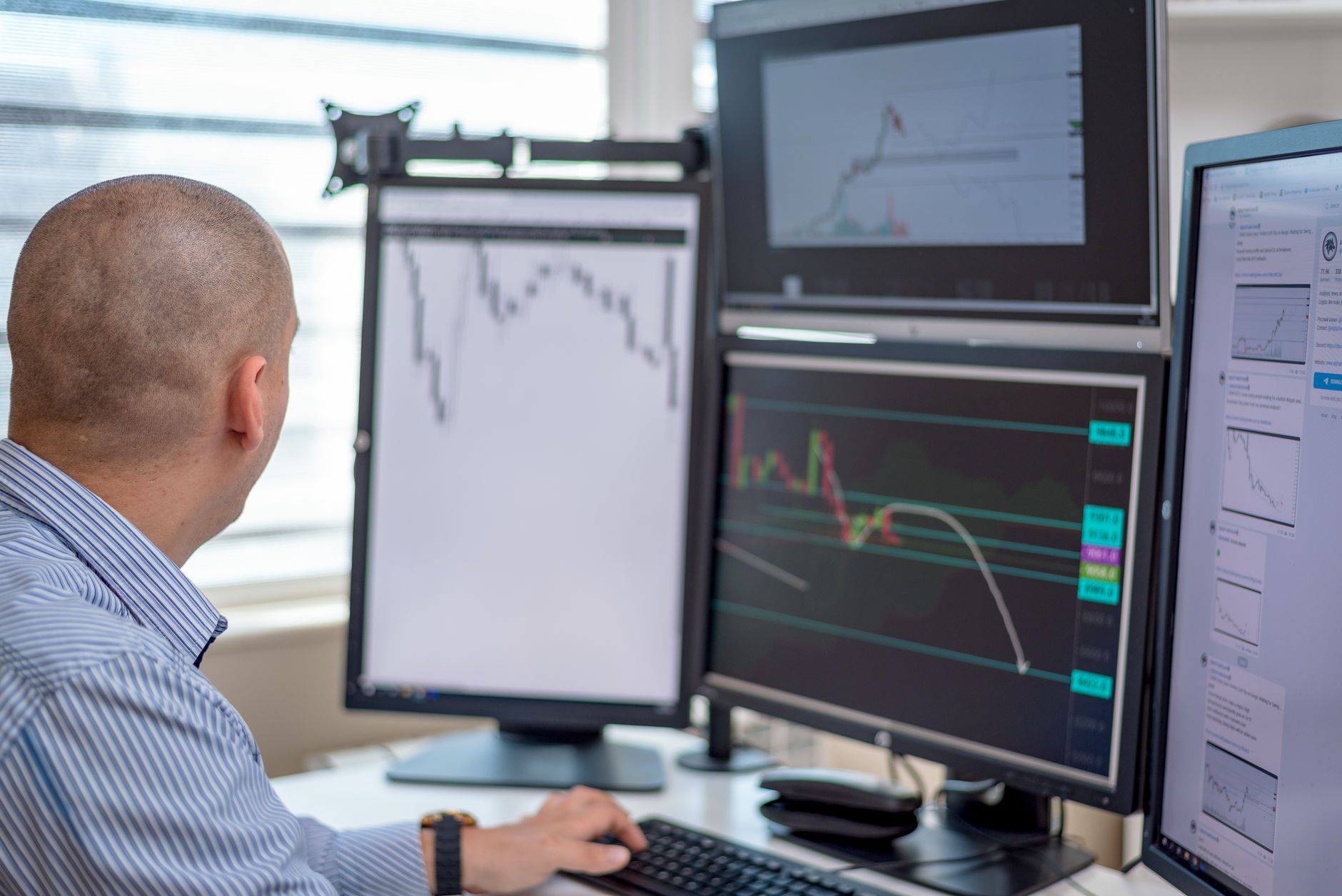
Photo by AlphaTradeZone on Pexels
Step 3: How to Evaluate AI-Generated Match Predictions Against Historical Performance
Evaluating an AI model against history requires three concrete benchmarks: closed-loop backtesting on the last two completed seasons, calibration error on outright vs totals markets, and edge-retention on closing-line value. According to research aggregated by the University of Tokyo Sports Analytics Lab in late 2025, the top six commercial AI prediction engines posted a 62% hit rate on over/under 2.5 goals across the 2024-25 Premier League season, compared with 54% for a panel of 40 expert tipsters. The same study found that AI's edge was smallest on outright winners (just 1.8 percentage points better than human tipsters) and largest on derivative markets like both-teams-to-score and first-half totals.
Here is the counterintuitive finding that most bettors miss: AI underperforms humans on derbies, relegation six-pointers, and matches decided by red cards or last-minute penalties. These fixtures contain emotional and discontinuous variables that historical training data does not capture well. If you only use AI for "normal" matches and switch to manual analysis for high-volatility fixtures, you capture roughly 70% of the AI edge while avoiding its biggest blind spots. This selective-AI approach was validated in a 2026 working paper from the Stanford Computational Policy Lab, which concluded that "human-AI hybrid decision-making outperforms either approach alone in domains with rare but consequential tail events."
A second evaluation tactic is to check how the model performs on its lowest-confidence predictions. AI outputs a probability, and most platforms hide that figure behind a single pick. If you can extract the raw probability — either via API or by reading the model's published calibration curves — you can fade the AI when its confidence is below 58% and ride it when confidence exceeds 72%. According to research from the betting-analytics firm Stratagem in March 2026, this confidence-threshold strategy turned a flat 52% ROI into a 7.4% ROI across 3,200 Premier League bets. For a deeper look at the math, our [Internal Link: probability calibration explained] walks through the Brier-score logic in plain English.
<a href="https://match-daily-client-en-203.a3seo.com/" class="cta-button" style="display: inline-block